


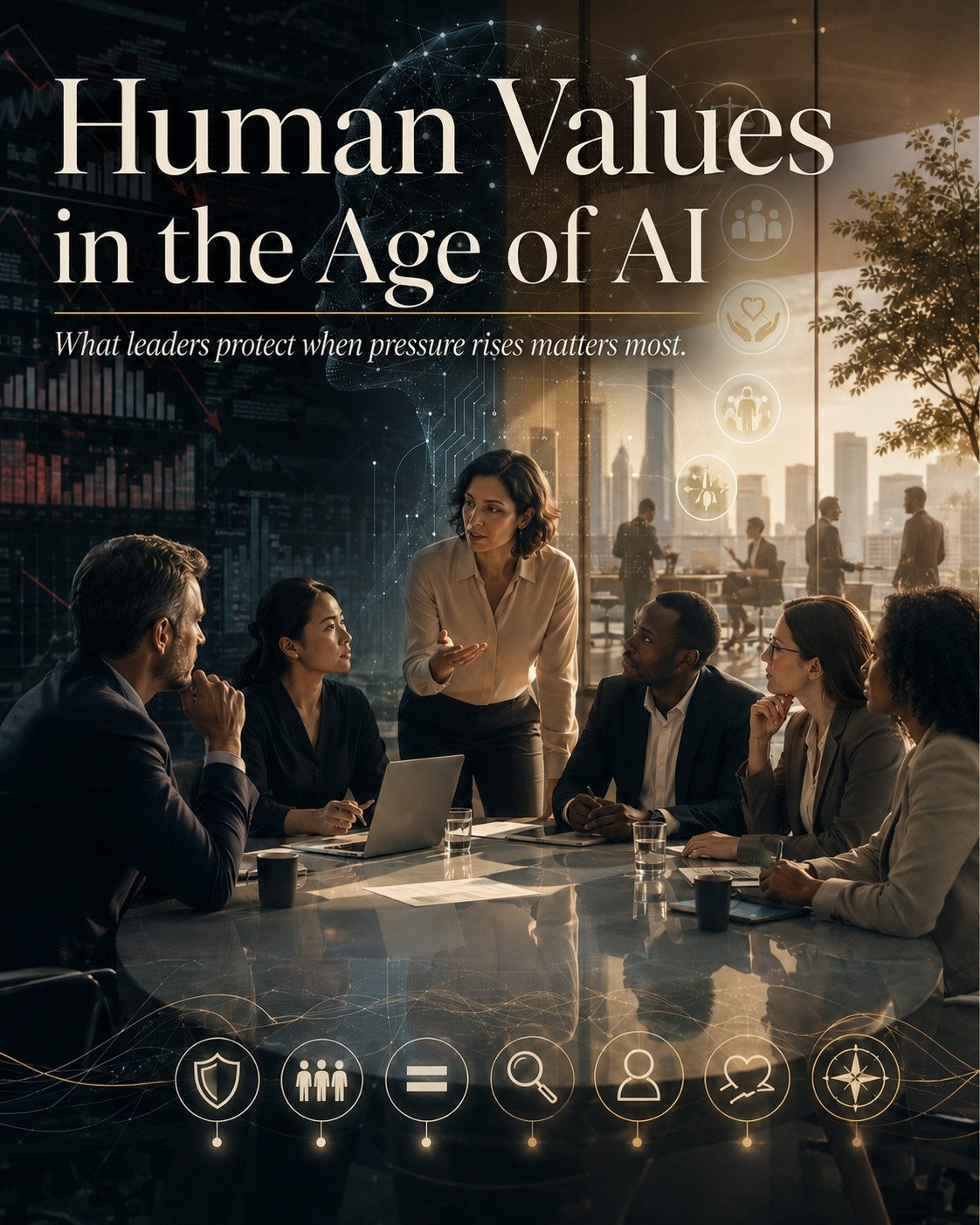
The real test of organisational values is not what leaders say when business is comfortable, but what they protect when pressure rises.
BY DINESH KARNA
Over nearly two decades in corporate life, I watched organisational values arrive with energy and conviction. They appeared in leadership speeches, emails, town halls and posters. We were told that people came first, integrity mattered, and development would create opportunities from within. For a time, the language resonated. Then business pressure increased, the messages faded and the behaviours stopped matching the words. The values did not disappear in one dramatic moment; they simply moved into the background while quarterly targets and cost savings took centre stage.
“If people are only first when conditions are favourable, were they ever truly first?”
VALUES ARE REVEALED UNDER PRESSURE
That is when values become real, or become branding. A people-first organisation is tested when an employee needs support, when development takes longer than expected, or when retaining experience costs more than a quick reduction. Integrity is tested when leaders must choose between a principle and a modest quarterly saving. When the cheaper decision repeatedly wins, employees learn that values are conditional.
The financial logic is often incomplete. Losing experienced people removes more than salary cost. It can also remove institutional memory, customer knowledge, judgement, mentoring capacity and the informal networks that help work move through an organisation. Those losses rarely appear neatly in the quarter in which the decision is made. They surface later through slower decisions, repeated mistakes, weaker morale and declining trust.
This does not mean every role must be protected indefinitely. It means difficult decisions should be reached transparently, carried out fairly and tested against the commitments the organisation has made to its people.
AI will not create an organisation’s values. It will reveal and amplify the values already embedded in its decisions.
AI WILL SCALE WHAT ALREADY EXISTS
AI makes this leadership test more urgent. It can accelerate analysis, automate tasks and reshape roles, but it cannot decide what an organisation should stand for. Microsoft’s 2026 Work Trend Index found that only 26% of surveyed AI users said their leadership was clearly and consistently aligned on AI. Without that clarity, employees are left to wonder whether AI will be used to develop human capability, or simply to remove cost faster.
Values and performance are not opposing forces. Integrity builds trust. Trust strengthens collaboration, candour and decision quality. Those capabilities improve customer outcomes and long-term performance. In that sense, values are not a cultural extra; they are part of the organisation’s operating system.
The practical questions are straightforward. When an AI system recommends a workforce decision, who remains accountable? Can an employee understand and challenge it? Does the decision reflect fairness and inclusion, or merely optimise what is easiest to measure? And does leadership apply the same standards when the answer carries a financial cost?
The defining question is not whether the organisation has values. Most do. It is whether those values still govern decisions when there is something to lose. The organisations that thrive in the age of AI will not simply be the fastest adopters. They will be the ones that combine technological progress with the discipline to protect trust, fairness, transparency, inclusion and accountability.
AI will scale whichever answer is already embedded in the culture. When values disappear under pressure, trust disappears with them, and sustainable performance is rarely far behind.