


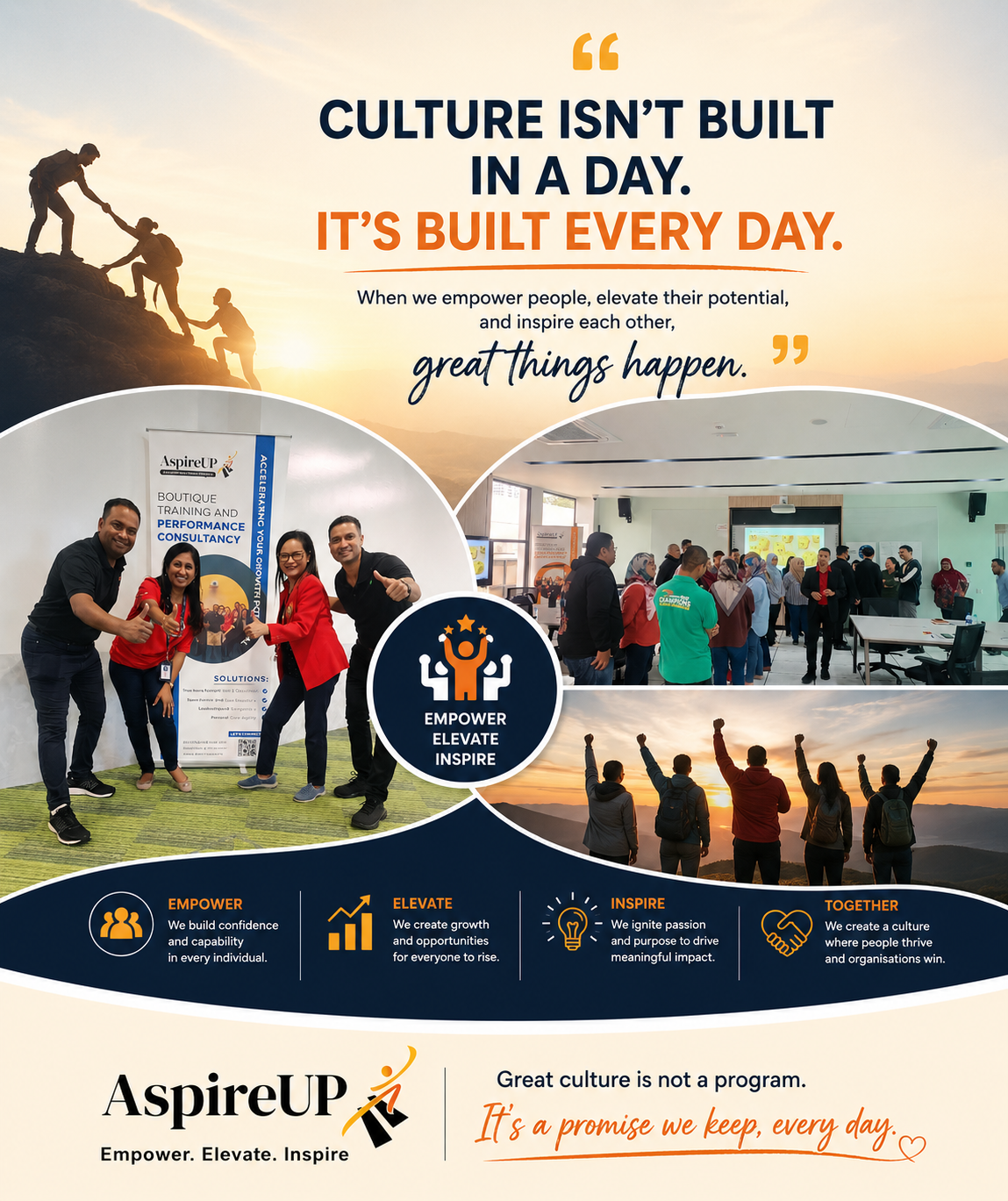
Curated By Arvind Kumar
What Malaysian Data — and one of the world’s best workplaces — teach us about turning culture into a competitive advantage
Workplace culture has moved from a “nice to have” to the single biggest lever leaders have over retention, productivity, and employer brand. Yet globally, only one in five employees say they are genuinely engaged at work, a gap that costs the world economy an estimated USD 10 trillion a year in lost productivity. Malaysia is not exempt from this trend — but recent research from the region also points clearly to what closes the gap.
What the Malaysian Data Tells Us
Three independent data sources paint a consistent picture of where Malaysian organisations stand today.
Engagement is middling, but purpose is a bright spot
Benchmarking by Culture Amp places Malaysia in the bottom half of markets globally on overall engagement and employee Net Promoter Score. The standout exception: Malaysian employees are unusually clear on why their work matters, with the vast majority saying they understand how their role connects to company goals. The weakest spot, by contrast, is trust in compensation fairness — a sizeable share of employees don’t believe their pay is equitable relative to similar roles elsewhere. In short: Malaysian teams generally know their purpose, but many don’t yet trust the systems around them.
Culture type predicts engagement
Academic research into Malaysian manufacturing organisations found that the type of culture a company runs on — clan (people- and relationship-oriented), adhocracy (innovation-driven), market (results-driven), or hierarchy (process-driven) — has a measurable effect on how engaged employees become. Cultures built around people and shared values consistently out-performed rigid, control-first cultures on engagement outcomes.
Recognition moves the needle more than most leaders assume
A survey by the Malaysian Institute of Human Resource Management found that roughly three in four employees feel meaningfully more engaged when their achievements are recognised — a low-cost, high-leverage lever many organisations under-use.
The market is paying attention
In February 2026, Great Place To Work launched its first-ever Best Workplaces in Malaysia™ list, drawing on feedback from over 45,000 employees — one of the most comprehensive workplace culture studies the country has seen. The timing matters: Malaysia is in the middle of a tightening talent market, with tech alone facing a shortfall of roughly 30,000 skilled professionals. Culture has become a genuine recruiting and retention differentiator, not just an HR initiative.
Best Practice Case Study: Hilton Malaysia
The company that topped that inaugural Malaysian list in the large-business category was Hilton — also currently ranked the world’s No. 1 Best Workplace by Great Place To Work and Fortune, and the top-ranked hospitality employer in South East Asia. That consistency, from global scale down to a single hotel floor, offers a useful blueprint.
Hilton’s Malaysian recognition wasn’t built on a single initiative but on a stack of reinforcing people programmes: Thrive at Hilton (a wellness framework spanning physical, mental, and financial health), Lead@Hilton (a global leadership-development platform), Care for All (caregiving support for team members), Careers@Hilton (structured early-career pathways), and Go Hilton (a travel benefit open to all roles and regions).
The clearest illustration of the culture in practice is an individual story rather than a policy document. Nor Najihah Binti Che Kob joined a pre-opening Hilton property in Shah Alam in 2022 as a Housekeeping Coordinator, having come from a construction-management background with no hospitality experience. Over three years, with support from her managers and peers, she moved into Front Office, was promoted to Front Desk Team Leader, and then to Duty Manager — a career arc that Hilton’s regional leadership has pointed to as representative of how the company invests in internal mobility rather than treating career paths as fixed by starting role. Hilton’s area vice president for South East Asia framed the recognition as a reflection of how consistently team members are supported to grow, not as a one-off employee-of-the-month story.
The lesson generalises well beyond hospitality: the programmes matter, but what actually gets felt as culture is whether an average employee’s career story looks like Najihah’s — visible growth, real sponsorship, and leaders who treat development as core business, not a perk.
Three Key Strategies for Leaders
Bringing the research and the case study together, three strategies stand out for leaders building — or rebuilding — organisational culture.
1. Make growth and internal mobility structural, not incidental
Malaysian engagement data shows employees are clear on purpose but uneasy about fairness and advancement. Hilton’s answer was to formalise growth through named platforms (Lead@Hilton, Careers@Hilton) rather than leaving development to individual managers’ discretion. Leaders should audit whether career pathways in their own organisation are documented, visible, and genuinely accessible from every entry point — not just from a handful of “high-potential” tracks.
2. Build recognition and fairness into everyday systems, not annual events
With roughly three-quarters of Malaysian employees reporting stronger engagement when recognised, and compensation fairness sitting as the weakest trust indicator in the data, recognition and pay transparency can’t be left to an annual review cycle. Leaders should build recognition into weekly or monthly rhythms — team shout-outs, peer nomination, manager check-ins — and proactively communicate how pay and reward decisions are made, even when they can’t share every number.
3. Treat culture measurement as a leadership discipline, not an HR survey
Great Place To Work’s Malaysian benchmark and Hilton’s own Trust Index results both work because they’re measured consistently, cut by demographic group and role, and tied to visible leadership accountability — not run once and filed away. Leaders should adopt a similar cadence: a regular, confidential pulse on trust, fairness, and pride, reviewed by leadership (not just HR), with visible follow-through on what employees raise.
The Takeaway
Culture doesn’t change because a value gets printed on a wall or a mission statement gets rewritten — it changes when growth, recognition, and fairness become structural parts of how a company runs, and when leaders are willing to be measured on it. Malaysia’s data shows organisations already have employees who understand their purpose; the opportunity now is to build the systems that make that purpose feel fairly and consistently rewarded. Till the next article, Arvind signing off!
| SOURCES
Gallup, State of the Global Workplace 2026 · Culture Amp, Malaysia Engagement Benchmark (2025) · International Journal of Academic Research in Business and Social Sciences, “The Effects of Organizational Culture on Employee Engagement: A Malaysian Manufacturing Company’s Perspective” (2022) · Malaysian Institute of Human Resource Management survey (via eLearningMinds) · Great Place To Work, Best Workplaces in Malaysia™ 2026 · Hospitality Net / Hilton, “Hilton Clinches Top Spot as Malaysia’s Best Workplace in Inaugural Ranking” (March 2026). |