


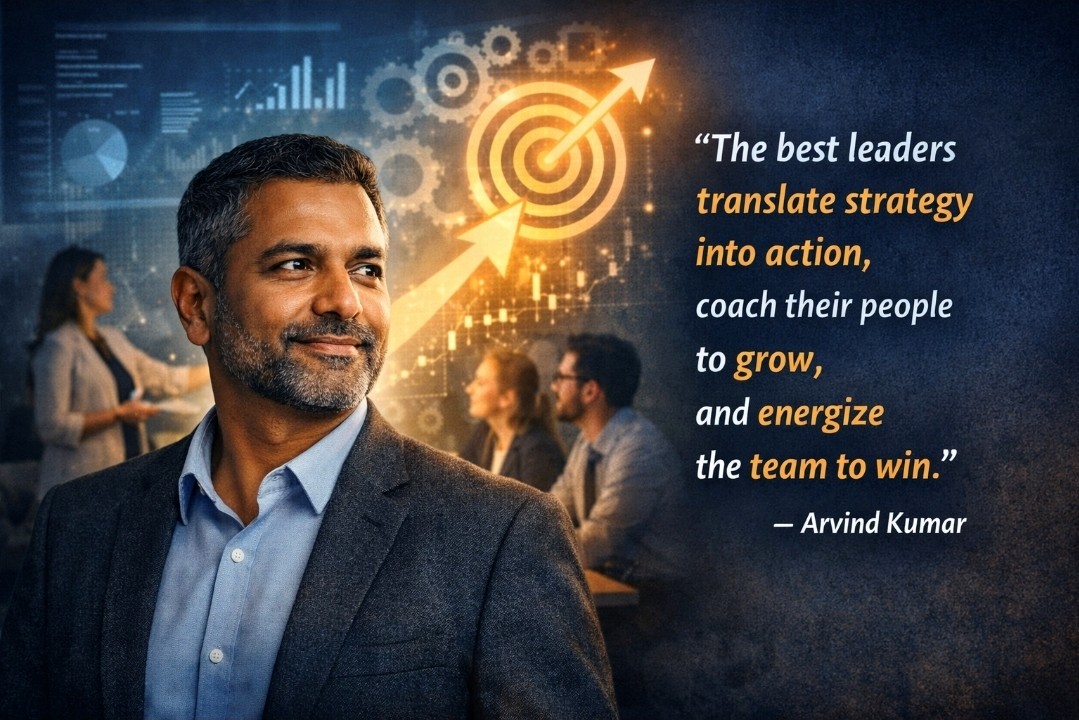
The Leadership Makeover: 5 Key Actions Mid-Level Leaders Must Take to Transform Team & Department Success (2026)
Mid-level leaders sit at the most critical intersection in any organisation: where strategy meets execution, and where people decide whether to give their best—or just get by.
Gallup’s research has consistently found that managers account for approximately 70% of the variance in team engagement. When engagement drops, execution suffers—quietly at first, then suddenly.
In Malaysia, the Malaysia Well-being @ Work Index (2024) reported psychological safety at 64% (down from 66% in 2023), alongside rising psychosocial risk. This is a clear signal: leadership must evolve.
If you are a mid-level leader—Head of Department, Senior Manager, Unit Lead—here are five leadership actions that will define department success in 2026 and beyond.
1. Translate Strategy into “Tuesday-Morning Clarity”
Most teams do not fail because they lack effort. They fail because they lack clarity.
Your role is to become a strategy translator—turning big goals into crisp execution:
– Define the “What”: Top 3 outcomes that matter this quarter.
– Define the “How”: 5–7 operating principles for decision-making.
– Define the “Who”: Clear ownership (one name per deliverable).
Google’s Project Aristotle highlighted structure and clarity as key drivers of team effectiveness.
2. Build Psychological Safety
If people do not feel safe to speak up, they will not challenge weak decisions, flag risks early, or share uncomfortable truths.
Research from Google and Harvard Business Review reinforces that psychological safety is a defining factor of high-performing teams. Yet middle managers often report feeling the least psychological safety themselves.
Practical actions:
– Start meetings with: “What are we missing?”
– Reward early risk-raising.
– Encourage respectful disagreement.
3. Shift from Manager to Coach
The old model: You solve problems.
The new model: You grow problem-solvers.
Coaching leadership unlocks ownership, innovation, and accountability.
Try replacing advice with coaching questions:
– “What options do you see?”
– “What data do we need?”
– “What would good look like?”
– “What is the smallest next step?”
Consistency matters—two structured coaching check-ins per month can transform performance.
4. Upgrade Your Operating Rhythm
Departments do not need more initiatives. They need better cadence.
Recommended rhythm:
– Weekly: 30-minute execution huddle.
– Monthly: Performance review (3 key metrics + lessons learned).
– Quarterly: Strategy reset (stop/start/continue).
McKinsey’s transformation research shows that middle managers are the engine of execution. Without structured operating systems, strategy becomes theatre.
5. Lead the Human Energy of Your Department
In 2026, competitive advantage is not just process—it is people energy: focus, resilience, and belief.
WHO Malaysia has highlighted the growing importance of mental health and supportive management practices in sustaining performance.
Make energy a leadership metric:
– Watch for overload patterns.
– Create boundaries and clarity.
– Normalize recovery cycles.
Sustainable performance comes from balanced intensity.
Final Reflection
Mid-level leadership excellence in 2026 is about becoming:
– A Translator (Clarity)
– A Stabilizer (Safety)
– A Multiplier (Coaching)
– A System Builder (Cadence)
– An Energizer (Well-being)
When these five actions are practiced consistently, departments do not just improve performance—they build the capacity to keep winning.
Article Curated by Arvind Kumar
26 Feb 2026