


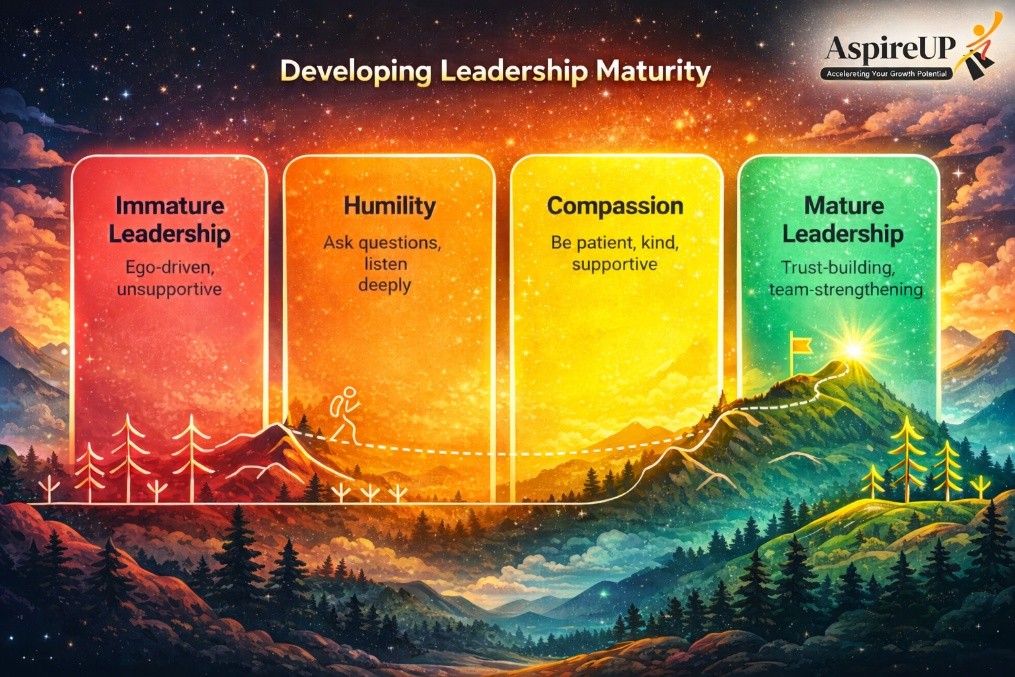
Humility When You Know Less. Compassion When You Know More.
Leadership maturity is often revealed in the quiet moments, not the loud ones.
It shows up when a leader is faced with something they do not fully know and chooses humility over ego. It shows up again when a leader has more experience, more context, or deeper expertise, and chooses compassion over superiority.
These two responses may seem simple, but together they reflect one of the most important balances in effective leadership: the ability to remain teachable when learning, and gracious when guiding.
When You Know Less, Lead with Humility
There are moments in leadership when you are not the most knowledgeable person in the room. You may lack technical depth, specific context, or first-hand experience on a particular issue.
In those moments, maturity is not about pretending to have the answer. It is about being secure enough to admit what you do not know.
Humility in leadership means asking thoughtful questions, listening without defensiveness, and giving space to the people closest to the issue. It means choosing curiosity over control.
A humble leader might say:
- “I’m not the expert here, help me understand.”
- “Let’s hear from the person closest to this.”
- “I may be missing something. Walk me through it.”
This is not a loss of authority. It is a demonstration of grounded confidence.
When You Know More, Lead with Compassion
Leadership is tested just as much when you know more.
When you have more experience, stronger skills, or a clearer perspective, it can be tempting to correct quickly, speak sharply, or assume others should already understand what seems obvious to you.
But leadership maturity does not use knowledge to diminish others. It uses knowledge to develop them.
Compassion in leadership means being patient in how you guide, respectful in how you correct, and intentional in how you help others learn. It protects dignity while still maintaining standards.
A compassionate leader might say:
- “Let me simplify this and walk through it with you.”
- “You’re still learning, let’s work through it together.”
- “I’ve made similar mistakes before. Here’s what helped me.”
This is where expertise becomes influence.
What Leadership Maturity Looks Like in Practice
Leadership maturity is not just an idea. It is visible in behaviour.
It looks like:
- Admitting when you do not know
- Seeking input before making assumptions
- Correcting without humiliating
- Coaching rather than overpowering
- Protecting dignity while maintaining standards
Leaders who practise this well create environments where people feel respected, trusted, and willing to grow.
Why This Balance Matters
The way leaders respond in these moments shapes more than a conversation. It shapes team culture.
Humility builds trust because it signals openness and self-awareness. Compassion builds trust because it signals safety and respect.
Together, they create a leadership presence that is both credible and human.
A 2025 Harvard Business Review research summary noted that humble leaders are associated with stronger teamwork, greater trust, improved employee well-being, and a greater willingness in others to step up and lead. That is a powerful reminder that humility is not softness. It is a leadership strength.
The Leadership Standard That Endures
The most effective leaders do not pretend when they know less, and they do not act superior when they know more.
They stay grounded enough to learn.
They stay compassionate enough to teach.
And in both moments, they protect the dignity of the people around them.
Humility when you know less. Compassion when you know more.
That is more than good leadership.
That is leadership maturity.